Creating a Safe and Supportive Home for Seniors with Dementia
Read our practical guide on modifying your loved one’s home for safer, more manageable dementia care
Written by
By Jill Tomasetti
Published
22 June 2026
Blog /
For many of us, home is where we feel safest and most comfortable. For older adults with dementia conditions, this feeling can be even more pronounced and important to support.
Introduction to dementia home safety
The home environment plays a big role in the health, wellbeing, and safety of older adults with Alzheimer’s and other dementia conditions. As the need for in-home dementia care increases, so does the need for small changes around the house to help your loved one adapt to each stage.
There are many things we can do to make our loved one’s house, apartment, or even bedroom safer and easier to navigate, especially as dementia symptoms progress over time.
From simplifying furniture layout to adding written labels and other visual cues, we’ll share practical home modifications you can make to help keep your loved one safe and minimize memory-related anxiety, disorientation, and accidental injuries.
Dementia-friendly home modifications: Lighting and noise-levels
Because dementia symptoms have to do with how our brains process information, sight and hearing can be greatly affected over time, which can have an effect on emotions and mood.
How to adjust lighting for dementia-home safety
Bright, natural, even lighting can help reduce the risk of falls and decrease confusion. At night, be sure that lights can be turned all the way off to promote better sleep. Here are a few suggestions for adjusting the lighting in your loved one’s room:
- Try lights with automatic sensors
- Make sure windows offer plenty of light by removing any obstructions and opening curtains and blinds during the day
- Reduce glare and reflections wherever possible, as this can increase confusion. Remove mirrors as mirrored images may confuse the person with dementia, and cover or remove highly reflective surfaces, such as glass or highly polished furniture
- Use nightlights in hallways and bathrooms to avoid nighttime falls
- As a person ages, regular visits to an eye doctor can help flag any dementia-related vision problems
How to adjust sound for Dementia home safety
Excess noise can be alarming or confusing to a person with dementia, especially as many hearing aids amplify certain sounds. There are a few ways to help create a quiet (but not silent) home environment:
- Reduce background noise by turning off music or tv when no one is watching; turn on subtitles or closed captioning rather than turning up the sound too high
- Try to avoid too many competing sounds all at once by limiting the number of people who visit at one time and making sure music, tv, and games are not on all at once
- Shut the windows when it’s very noisy, for example if neighbors are mowing the lawn or if there are lots of sirens or noisy traffic
- Carpets, cushions, curtains, and soft furnishings can help absorb sound in a room with linoleum or tile flooring. Note: Rugs can be tripping hazards, so opt for wall-to-wall carpeting if possible. See more on safe flooring options below
- If the person wears a hearing aid, check the batteries, settings, and fit often; people with dementia may not remember how to use or wear their hearing aid, decreasing its effectiveness
Modifications for mobility care for seniors with dementia
Simplifying the layout of your loved one’s furniture is a great first step to reduce tripping hazards and make space for mobility support. Beyond reducing clutter and removing unnecessary small items around the room, there are many other ways you can make it easier for your loved one to move around their home as their vision and mobility become more limited:
Dementia-friendly choices for flooring
- Paint walls and furniture a contrasting color from the floor
- Avoid small area rugs; a person with dementia may become confused and think the rug is an object they need to step over
- As with furniture and mirrors, shiny or reflective flooring can also be slippery and disorienting so it’s best to carpet over it or go with a matte, non-shiny flooring choice
- Use brightly colored tape to mark the edges of stairs and steps
- Make sure all cords and cables are removed from the walkway and secured against the wall
Dementia-friendly tips for supporting safe movement
- Be careful about small pets, as they can also be tripping hazards and may even cause confusion at times
- When choosing carpeting, curtains, blankets, and other home furnishings, opt for plain colors, as busy patterns may cause visual confusion
- Place a gate across the stairs if your loved one has trouble with their balance; install a sturdy handrail and safety grip strips on stairs for added traction if they aren’t carpeted
- Buy your loved one shoes and slippers with good traction
- Install grab bars in the bathroom, near the toilet and in the shower
Dementia home safety tip: Add visual cues for improved spatial awareness
As dementia symptoms progress, your loved one may not remember where they are, what common objects are, or where to find the things they need. While vision also can worsen over time, using contrasting colors and written labels are a great way to help your loved one orient themself and successfully navigate their space.
Use contrasting colors to assist with depth perception
Using contrasting colors can help a person with dementia differentiate between objects and may also assist with their depth perception and knowing where it is safe to step or sit. Contrasting colors can be useful to:
- Differentiate between walls, floors, and furniture and furnishings (for more on flooring, see section above)
- Make doors and banisters stand out against a white wall, for example
- Reduce risk of falling by installing a toilet seat in a contrasting color to the rest of the bathroom
- Reduce anxiety around bathing by placing a contrasting-colored towel on the shower or tub floor before setting up the shower stool; this can help a person know where it is safe to step when bathing, as it reduces glare and supports more accurate depth perception
- Define the edges of dishware on the tablecloth or table
Add bold written labels or signs to reduce confusion
Most people with Alzheimer's and other kinds of dementia are able to read until the late stage of the disease. Clear, concise labels or signs with simple written instructions can help remind your loved one of where things are and what they’re for.
Tips for making dementia-friendly labels and signs:
- Language should be direct and clear
- Words and an appropriate picture should be large enough to read easily and contrast with the background
- Sign should be placed in a low, but easily visible place
Where to place sign and labels for dementia-friendly home modifications
Labels and signs are very personal to each household and living situation. Whether your loved one has a room in an assisted living community, still lives independently in their own home, or lives with a family member, all signs and labels should be tailored to support their unique needs and routines.
Where to place dementia-friendly labels and signs:
- Doors, such as bathroom, bedroom, and kitchen
- Closed cupboard and drawers should be labeled with what’s inside; you can even include who it belongs to, a brief instruction, and a photo of the contents
- Hot and cold water taps
- Kitchen appliances
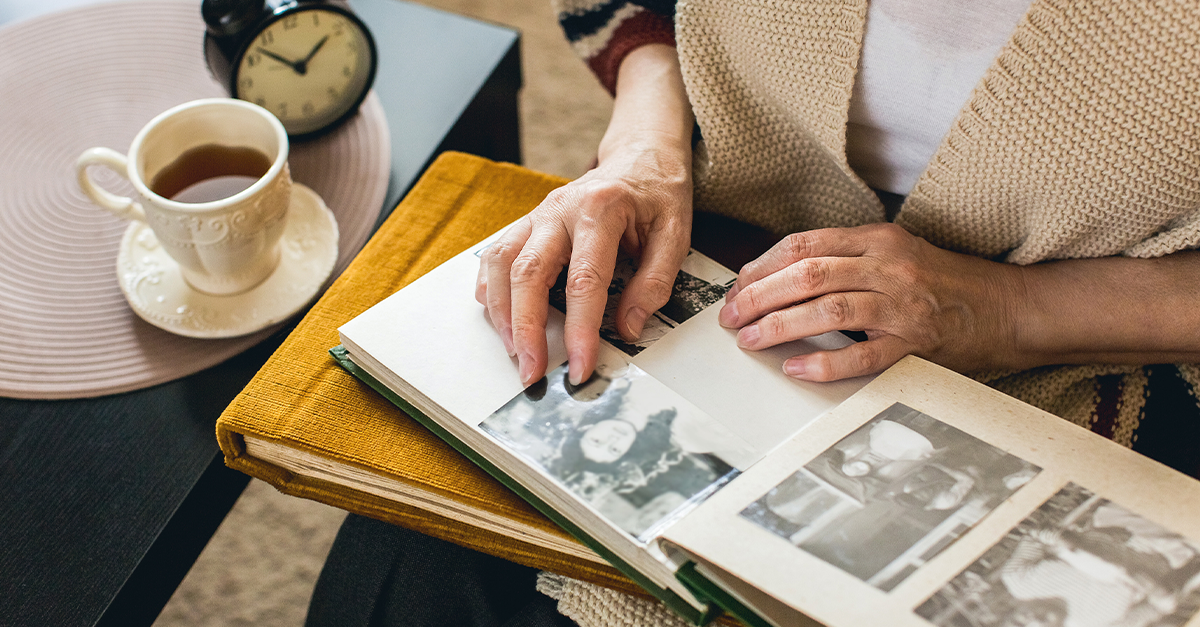
- Photo albums with each person’s name and their relationship
- Tip: Labels that describe the function of objects can be helpful (for example, label a sweater drawer with “Wear these when you feel cold”)
In-home dementia care: Common home safety measures
With all the proactive modifications you can do around the house to help your loved one maintain their independence, there are also some essential safety measures to put in place.
Here are the National Institute on Aging’s top recommendations for making the home environment safer for a person with Alzheimer’s or other types of dementia:
- Add smoke and carbon monoxide alarms in or near the kitchen and all bedrooms
- Keep emergency phone numbers (ambulance, poison control, doctors, hospital, emergency contact) and the home address near all phones
- Buy a phone with large touchpad buttons and digital clocks with large displays, showing day, date, and time
- Install safety knobs on the stove and a shut-off switch
- Purchase childproof plugs for unused electrical outlets
- Lock up or remove the following from accessible locations:
- All prescription and over-the-counter medications
- Alcohol
- Cleaning products, dangerous chemicals, matches, etc
- Poisonous houseplants
- Weapons, scissors, and knives
- Gasoline cans or other or dangerous tools and items in the garage
Deciding what dementia-friendly home modifications to choose
As you gather information about what kinds of changes you may need to help your loved one make, it’s important to remember that in most cases there’s no need to make drastic modifications overnight.
Stay in close contact with your loved one’s doctor and care manager to help prioritize which changes to tackle first. Talk to your loved one to find out what their preferences are and help them plan ahead for home modifications and in-home dementia care services.
Still need help?
Call our Support team for further assistance.
Mon-Sat, 9AM-6:30PM PT- Call us at:
415-506-9776
- Send us an email
support@herewith.com





Herewith provides a platform to assist Helpers and care recipients in connecting regarding in-home non-medical care opportunities. Herewith does not employ any Helpers, nor does it recommend any Helpers and/or care recipients who use its platform. User information provided in profiles, posts, and otherwise on the Herewith platform is not generated or verified by Herewith. Each user of Herewith's platform is responsible for conducting their own vetting before determining whether to enter into an employment relationship and for their own conduct, including compliance with applicable laws.