Managing Rehab Care for Seniors: A Guide for Families
Learn the basics about senior rehab facilities, questions you should ask, and how to plan ahead for recovery care
Written by
By Jill Tomasetti
Published
02 May 2025
Blog /
Why rehab care is important for older adults
As we age, recovery after a major medical event often requires several stages of rehabilitation that each take place in different settings, however many older adults may need some assistance to manage these transitions. THey may need help with transportation, medication reminders, pharmacy visits, mobility assistance, help around the home, companionship, and support with ADLs (Activities of Daily Living, such as bathing and eating).
With proper caregiving support such as in-home care Helpers, older adults and people with chronic conditions experience a reduction in emergency room visits, a smoother path to recovery, improved adherence to treatment plans, and a reduction in readmissions.
Navigating post-hospital care for older loved ones
The logistics of planning and managing care throughout these transitions can be overwhelming, especially if you’re navigating the process on behalf of a loved one.
Our top takeaway is to get involved as early as possible in your loved one’s rehab care, ideally before they are released from the hospital, advocating for their wellbeing, asking questions, and following up on next steps and options.
The AARP strongly encourages family caregivers to take a proactive role in planning and facilitating the transitions between hospital, rehab center, and home, to help prevent hospital readmission, miscommunication between care providers, and gaps in care.
What to know about senior rehabilitation facilities
Often, after an older adult is treated in the hospital, if additional support with recovery and rehabilitation is needed, they will be released into a rehabilitation facility that may specialize in geriatric medicine or may be open to a wider age range. However, it may come as a surprise to families when their loved one is discharged home afterwards with ongoing care needs.
Senior rehabilitation facilities: An overview of services
Rehabilitation facilities provide many services to help older adults recover from serious injuries, surgeries, or other medical events. Some of the main services include:
- Physical therapy - helps with mobility, balance, flexibility, strength, and pain management
- Occupational therapy - assists with activities of daily living (ADLs), use of adaptive equipment, or fine motor skills
- Speech therapy - helps with conditions that affect communication, swallowing, or cognitive skills, such as attention or memory problems
Rehab centers offer different levels of support, from inpatient to outpatient, short or long term, depending on what’s needed and what your insurance will cover. Sometimes, a home health care company may be able to provide the services your loved one needs in the home. Home health care sounds similar to in-home care (what Herewith can provide), but home health care differs in that it provides some medical support in the home and can be limited in hours and amount of personal care that it provides.
Because of the way these different services work (and sometimes don’t work) together, it’s essential to start discussing the options for your loved one before they are released from the hospital to make sure you find the right fit and prevent gaps in care.
Preparing for rehab care for seniors: A quick guide
Advocate for your loved one as early and as often as you can, making sure that the important questions are answered and that your loved ones’ best interests are represented in any decision.
AARP recommends insisting on the “3 Is—information, inclusion and instruction” (Managing the Transition From Hospital to Rehab to Home):
Information
- Obtain printed copies of all pertinent information, including your loved ones' current medications list and prescriptions (flag any changes), and a summary of their visit (diagnosis, treatment, prognosis, surgeries, limitations, etc.), rehabilitation recommendations and discharge orders
- Note any scheduled follow-up appointments
- Share this information with those who will care for your loved ones next (doctors, facilities, home health aides, professional caregivers, etc.)
Inclusion
- Proactively make certain that you are included in care planning discussions and are informed of changes and decisions
- Include your loved one in the planning if possible
- If you have health care power of attorney for your loved ones, you can make decisions for them
Instruction
- Nearly half of family caregivers are expected to perform follow-up medical and nursing tasks, so be sure to ask for detailed instructions/training (which is required by law in some states)
AARP’s Senior Rehab Care Transition Checklist:
AARP has put together this helpful checklist to assist you in managing your loved one’s transition between care facilities, such as from the hospital to a rehab center, or from a rehab center to their home.
- Contact discharge planner/social worker
- Discuss options/plans with patient
- Talk with health care practitioners and therapists
- Arrange for next step in care:
- Facility - Visit; review care provided, residents, visitors, meals, cleanliness, certifications, ratings, complaints, costs and insurance coverage
- Home - Understand insurance coverage of home-based care; arrange for home modifications, medical equipment, personal care, medical care, therapies, meals, transportation, visitors/socialization, prescriptions
- Get printed medication list, prescriptions and discharge instructions
- Get hands-on demonstrations/instruction on medical/nursing tasks; photos/videos
- Get appropriate clothing and personal supplies
- Arrange for transportation upon discharge
- Ensure transfer of medical records between facilities/providers prior to, at time of and following the transition
Who can help you manage rehab care for seniors
If you are not able to help your loved one, are located far away from your loved one, or are encountering difficulties in managing the transition between care providers or post-rehab care, it might be time to consult a professional. Here are some of the resources to look for:
- Hospital discharge planner or social worker - An employee of the hospital who can assist you with the planning stage and can provide guidance on care, transportation between facilities, insurance coverage, and payment plans
- Geriatric care manager - Usually a licensed nurse or social worker who specializes in geriatrics, who can help identify care needs, formulate a long term care plan, and connect you with resources.
- Social worker - A human services professional who works with older adults and their families, to face ongoing health challenges. You can find social workers through your city, or county, or through a private or condition-specific organization.
- Insurance case manager - A representative from your loved one’s insurance company who will work with you to provide understanding on cost of care, timelines, and what is covered.
- In-home caregivers - A professional caregiver with expertise in supporting rehab care, providing companionship, communicating with you about how your loved one is doing, and ensuring they’re being cared for on a daily basis.
Identifying gaps in rehab care for seniors: Tips for family caregivers
For most family caregivers, providing all the in-home support your loved one may need after rehab just isn’t possible. There may be certain times of day or night that you simply don’t have availability, or you may be too far to help out. These instances are considered gaps in care. In such cases, in-home caregivers are essential to your peace of mind and your loved one’s well being.
Ask yourself if your loved one needs assistance with any of the following to help identify gaps in care:
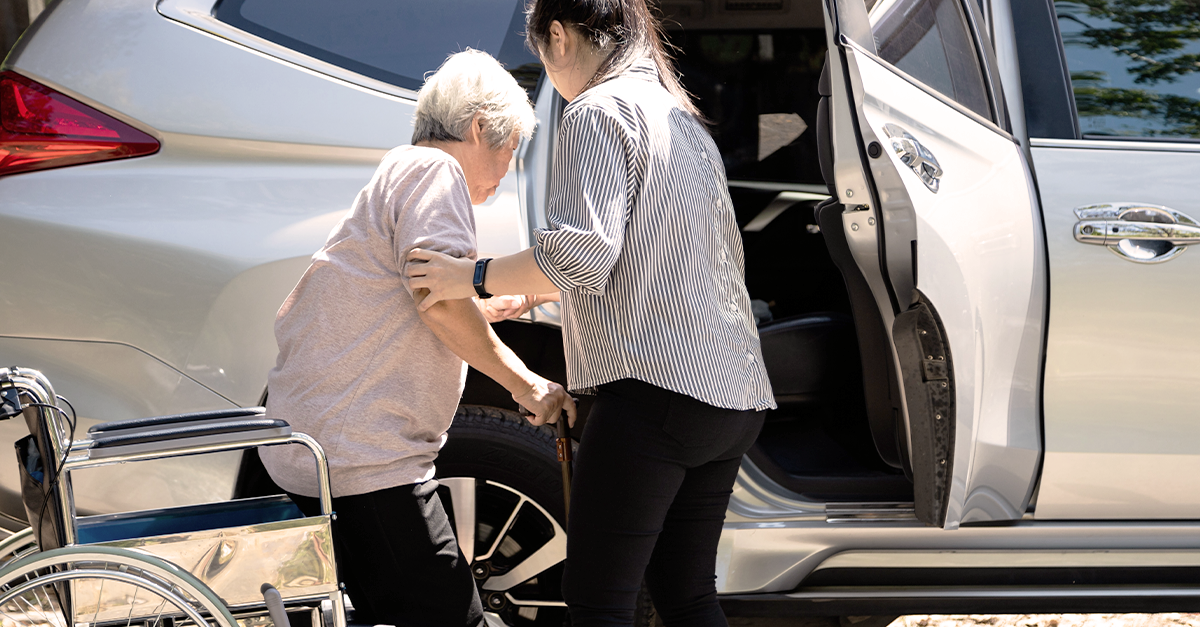
- Getting up in the morning, dressing, and transferring to a walker or wheelchair
- Going to the bathroom at night and during the day
- Performing self-care tasks, such as bathing and dressing
- Shopping for, preparing, and eating meals
- Taking medications on-time
- Attending to household chores such as cleaning, laundry, and lawn care
Ultimately, caring for a loved one’s rehab shouldn’t be the job of just one person. It takes a team, each with different skills and expertise. Keeping yourself informed and proactive helps the team stay united and focused on what’s most important—your loved one’s recovery and care.
Learn what kind of everyday support and care services Helpers can provide for your loved one.
Still need help?
Call our Support team for further assistance.
Mon-Sat, 9AM-6:30PM PT- Call us at:
415-506-9776
- Send us an email
support@herewith.com





Herewith provides a platform to assist Helpers and care recipients in connecting regarding in-home non-medical care opportunities. Herewith does not employ any Helpers, nor does it recommend any Helpers and/or care recipients who use its platform. User information provided in profiles, posts, and otherwise on the Herewith platform is not generated or verified by Herewith. Each user of Herewith's platform is responsible for conducting their own vetting before determining whether to enter into an employment relationship and for their own conduct, including compliance with applicable laws.