Life Beyond Dialysis: How One Helper’s Care Helps Patients Feel Like Themselves Again
Starting dialysis can feel overwhelming. Joel Lemus helps patients adjust to treatment at home and build a new routine around care.
Written by
By Ivy Shelden
Published
15 June 2026
Blog /
Dialysis is a heavy burden.
Treatments can last for hours, multiple days a week. And the physical exhaustion is only part of what patients endure.
There’s also the scheduling, the transportation, the waiting rooms, and the feeling that life is shrinking.
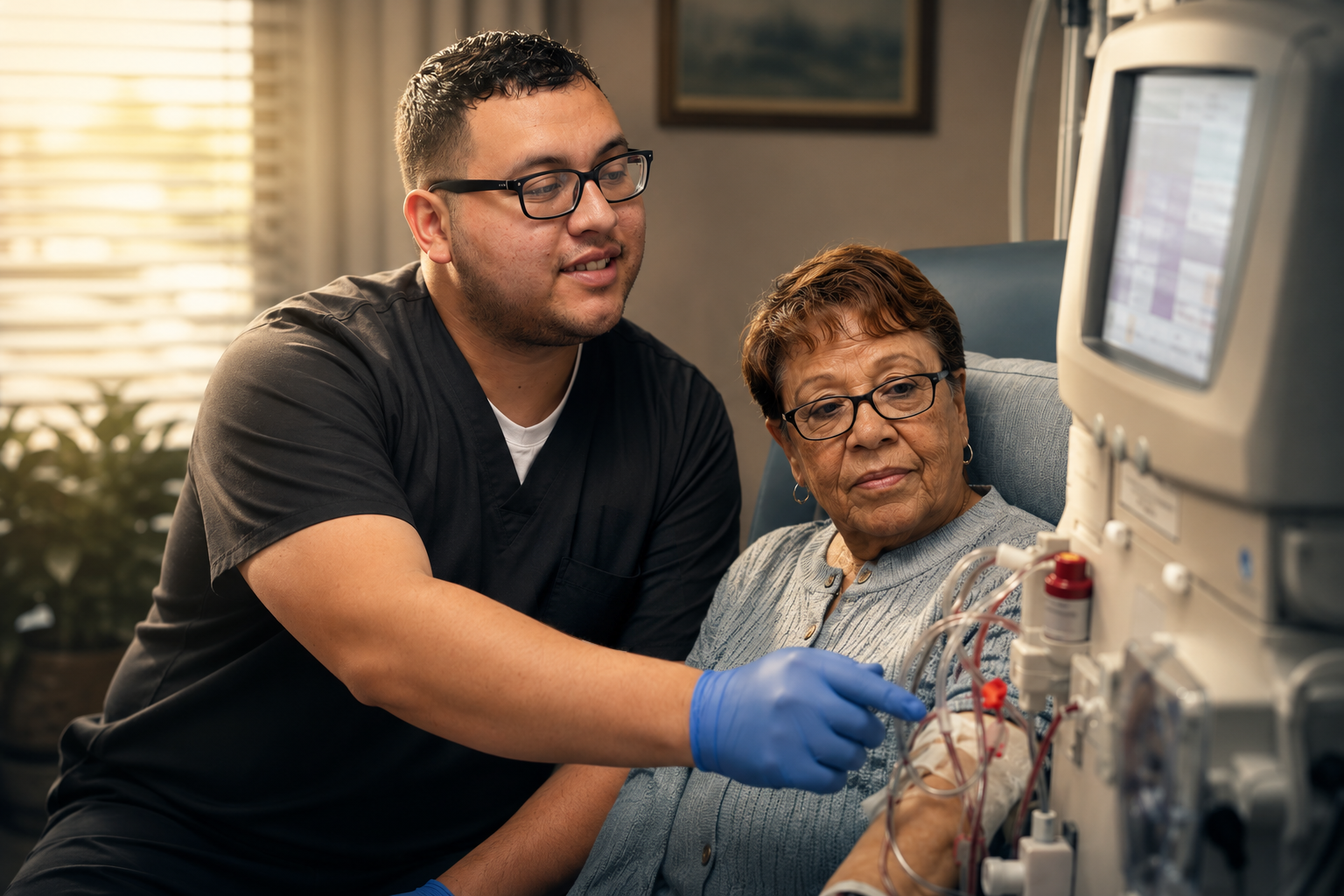
Dialysis Helper Joel Lemus is familiar with these challenges.
As an in-home dialysis Helper with Herewith, Joel helps patients manage treatments from home. But just as importantly, he helps them adjust to the emotional weight that comes with kidney failure and dialysis care.
“This is only part of their day,” he tells them. “It’s not the end of the world.”
Over time, he’s watched patients slowly start to believe that too.
A Healthcare Path Rooted in Family
Joel’s interest in dialysis care started with compassion and curiosity.
When he was young, his mother passed away from cancer. Around the same time, his grandmother began dialysis treatments, and Joel watched the impact it had on her daily life.
“I remember her coming home feeling just tired all the time,” he says. “And the day after treatment, she sometimes felt ill.”
He also observed his uncle’s career in dialysis care, which piqued his curiosity.
“I want to help people out as much as I can if there’s something I’m able to do,” he says.
After high school, he applied for a position at DaVita and eventually spent more than four years working in dialysis care in a clinic before transitioning into in-home treatment.
The Hidden Demands of Dialysis
A typical in-home dialysis session can take five to six hours from setup to cleanup, and many patients need several treatments per week.
And when they have to travel to a clinic for care, the process takes even longer.
Joel remembers seeing patients struggle just to make it to appointments at the clinic.
“They would have to miss treatment because they didn’t have a ride,” he says.
Joel explains the serious consequences of missing treatments.
“The biggest one would be fluid getting stuck in their body, or toxins. That's going to lead to them not feeling well. If you have a lot of fluid trapped in your body, it's eventually going to get into your lungs and you're going to have trouble breathing.”
Even when transportation to appointments is available, the dialysis process itself can wear people down. Patients may spend hours coordinating rides, waiting to be picked up, waiting for treatment to begin, then waiting again afterward to get home.
Patients start to feel like their entire life revolves around treatment.
Bringing Dialysis Care Home
Home dialysis helps reduce the complexities of having to get to a clinic.
Instead of spending hours coordinating transportation, patients can receive treatment from home with a trained Helper supporting them through the process.
Joel says the difference in patients’ attitudes is noticeable.
“Patients are more happy to do it at home because they don’t have to worry about being on time for a ride,” he says.
Scheduling also becomes more collaborative and flexible.
“We’re setting a schedule together,” Joel explains. “‘Can I be here at your house at this time? Is that okay with you?’”
Another benefit of home dialysis is a reduction in patients’ stress levels.
“They’re not having to struggle with another burden in their life,” he says.
Over time, Joel has noticed patients are more willing and motivated to stick with home treatment consistently.
“I’ve seen a big improvement on patients’ attitude to continue to do treatments as well,” he says.
How Herewith Supports In-Home Dialysis
Through the Herewith app, patients can manage care directly from their phones, including scheduling, communication, and real-time updates about visits.
“It’s very transparent for the patient,” Joel says.
Patients can see when their Helper is on the way, when they’ve arrived, and what shifts have been completed. For people already managing a serious health condition, that clarity can ease a lot of uncertainty.
One moment especially stuck with Joel.
“I was barely walking up the driveway and the patient’s already opening the door,” he says. “I was like, ‘How’d you know I was already here?’ And he’s like, ‘I got the notification on my phone.’”
When patients are balancing ongoing treatments for the rest of their lives, that consistency and communication can make care feel a little less overwhelming.
Helping Patients Build a New Normal
One patient in particular has stayed with Joel.
She was completely new to dialysis when they first met, and like many patients, she was terrified about what her future would look like.
“She was like, that’s it. I’m gonna be right here in this chair for the rest of my life,’” Joel recalls.
Joel tried to help her see it another way.
“You still have the other three or four days to live your normal life,” he told her.
“You don’t have to keep yourself locked in your house and away from the outside world just because you’re having to do dialysis.”
Over time, he watched her perspective shift.
She started adjusting to her routine. She spent time with family again. She enjoyed holidays and settled back into daily life instead of withdrawing from it.
A few months later, she thanked him.
“I thought this was it for me”, Joel remembers her saying. “Like I was never gonna live a normal life again or anything near it. And you made me think there’s still light at the end of the tunnel.”
This type of feedback means a lot to Joel.
He adds, “Helping somebody for part of the day so they can have a better rest of their day is a win-win.”
Herewith supports patients receiving dialysis at home by connecting them with in-home dialysis Helpers for flexible, ongoing treatment support.
Still need help?
Call our Support team for further assistance.
Mon-Sat, 9AM-6:30PM PT- Call us at:
415-506-9776
- Send us an email
support@herewith.com





Herewith provides a platform to assist Helpers and care recipients in connecting regarding in-home non-medical care opportunities. Herewith does not employ any Helpers, nor does it recommend any Helpers and/or care recipients who use its platform. User information provided in profiles, posts, and otherwise on the Herewith platform is not generated or verified by Herewith. Each user of Herewith's platform is responsible for conducting their own vetting before determining whether to enter into an employment relationship and for their own conduct, including compliance with applicable laws.