The History of Hemodialysis: How Home Dialysis Machines Have Evolved
Learn how home HD technology developed, and why support at home is still such a big part of patient success.
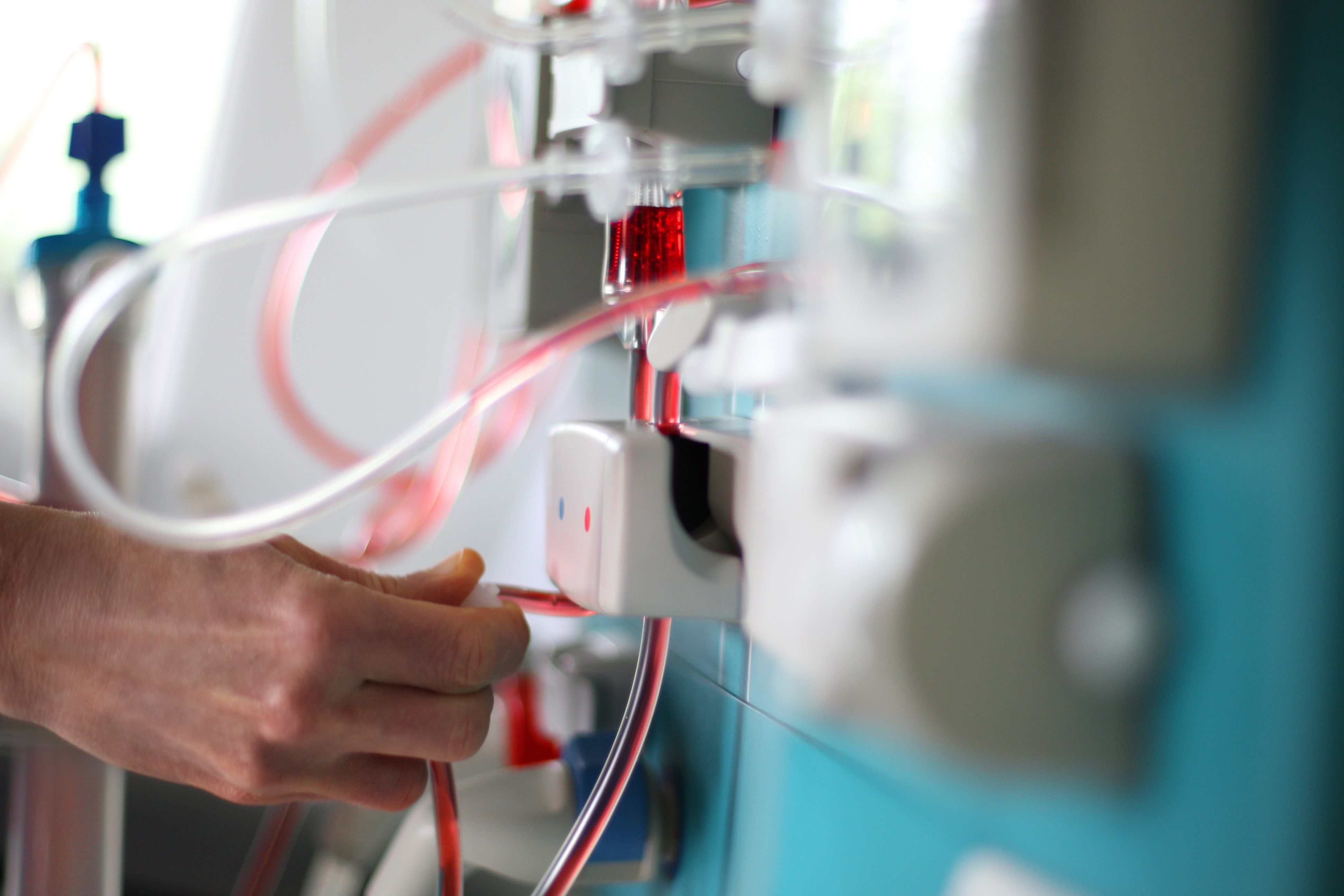
Home hemodialysis has come a long way.
In the 1960s, bringing dialysis home meant bulky equipment, plumbing changes, extensive patient training, and help from another person.
It was a lot to ask of patients and their families.
Newer machines have changed that picture. Advances in size, water treatment, and ease of use have helped make home hemodialysis (HHD) more accessible, giving dialysis clinics new opportunities to expand care beyond their facilities.
The history of hemodialysis shows how far the technology has come, and why helping patients succeed at home is still an important part of the conversation.
Where did the history of hemodialysis begin?
The first clinically successful artificial kidney came out of World War II. Dutch physician Willem Kolff developed his rotating-drum dialysis machine in the 1940s, and in 1945, a patient with acute kidney failure survived after treatment with it.
Hemodialysis works by circulating blood through a dialyzer, which removes waste products and excess fluid before returning the blood to the body.
Dialysis took another major step forward in 1960, when the Scribner shunt made repeated treatments possible. Seattle opened the world's first outpatient dialysis center in 1962, followed by pioneering home hemodialysis programs in Seattle, Boston, and London in 1964.
It was a turning point in the history of hemodialysis. Patients could receive ongoing treatment at home, although the equipment and training requirements meant HHD was still a demanding undertaking.
How did peritoneal dialysis change home treatment?
Home dialysis took another direction in the 1970s. The Tenckhoff catheter, introduced in 1968, helped make long-term peritoneal dialysis (PD) possible, and continuous ambulatory peritoneal dialysis (CAPD) soon gave patients a way to perform exchanges throughout the day. Automated cyclers later made overnight treatment possible.
PD offered a different way to dialyze at home, without the equipment and water treatment requirements of HHD. Medicare coverage also helped expand access to in-center dialysis across the U.S., giving patients another alternative.
By the 1980s, PD had become the more common home dialysis option in the U.S., while HHD gradually fell out of favor. It would take another generation of machines to bring renewed interest in home hemodialysis.
How did home hemodialysis machines evolve?
By the early 2000s, manufacturers were rethinking what a home dialysis machine could look like. Smaller equipment, cartridge-based systems, and new ways to prepare dialysate began reducing the demands of treatment at home.
Several FDA milestones show how the technology developed:
- 2005: NxStage System One received FDA clearance for home hemodialysis. Its compact, cartridge-based design took up less space than earlier equipment, with options for prepackaged dialysate or dialysate prepared at home using PureFlow.
- 2014 and 2017: NxStage received additional clearances for nocturnal home hemodialysis in 2014 and solo daytime treatment by appropriately trained patients during waking hours in 2017.
- 2020: Tablo received FDA clearance for home use. Its integrated water purification system prepares dialysate using tap water that meets specified requirements, reducing the need for separate water-treatment equipment.
- 2024: The Quanta Dialysis System (formerly SC+) received FDA clearance for home use, offering another compact system with a cartridge-based setup.
The improvements went beyond size. Depending on the machine, patients also gained guided setup, automated safety features, alarms, and the ability to share treatment data with their care teams.
Training and clinical oversight are still necessary, but newer equipment has reduced some of the work patients and care partners once had to handle themselves.
What does this evolution mean for dialysis clinics?
Smaller, easier-to-use machines have opened the door to home hemodialysis for more patients. Clinics have more flexibility in developing home programs, although equipment is only part of what patients need to succeed.
Learning to perform dialysis at home takes time. Patients still need training, ongoing clinical oversight, and help adjusting to treatment routines. Everyday tasks like preparing meals, keeping up with household chores, or getting to appointments can also become harder to handle.
That's where Herewith can help. Our platform connects patients and families with Helpers who provide flexible, non-medical support at home.
Through partnerships with dialysis clinics, individual Helpers can also be trained by clinic staff to assist with home hemodialysis treatments, similar to a family care partner, following the clinic's protocols and applicable requirements.
What’s next for home dialysis technology?
Researchers are continuing to explore ways to make dialysis equipment smaller and less dependent on large volumes of water. One area of interest is improving sorbent-based systems that regenerate used dialysate so it can be reused during treatment.
Wearable and implantable artificial kidneys are also being studied, although both are still experimental.
There's still a long way to go, but the research points toward technologies that could eventually give patients greater freedom in where and how they receive treatment.
Supporting home dialysis patients beyond treatment
Home dialysis technology has come a long way, but patients still need support as they adjust to treatment at home. Having someone to help with everyday tasks or assist with dialysis treatments after receiving appropriate clinic-led training can ease some of the demands on patients and their families.
Herewith partners with dialysis clinics to connect patients with Helpers who can support their care at home, giving clinics another way to extend their services beyond the treatment center.
Supporting home dialysis patients? Learn more about partnering with Herewith.
Still need help?
Call our Support team for further assistance.
Mon-Sat, 9AM-6:30PM PT
Related Articles
Starting dialysis can feel overwhelming. Joel Lemus helps patients adjust to treatment at home and build a new routine around care.

Find ways to ease the daily demands of dialysis caregiving and see how respite care can bring balance to your routine

Explore dialysis jobs that match your skills and see how Helpers can grow into specialized caregiving careers